








What Is ANKER Thus™? Anker's Custom AI Chip Explained (2026)
Key Information:
-
ANKER Thus™ is the world's first audio AI chip utilising Compute-in-Memory (CIM) technology — designed specifically for portable devices, rather than based on general-purpose hardware.
-
The CIM architecture eliminates energy consumption associated with transferring data between memory and processor, providing up to 150 times greater peak AI computational power whilst simultaneously maintaining low battery consumption.
-
Thus supports key AI-based audio processing directly on the device — including the Clear Calls function with 10-sensor fusion for voice isolation and other advanced audio functions — without the need to use external processors.
-
The first soundcore in-ear earbuds equipped with Thus debuted during Anker Day, 21 May 2026, in New York.
You are standing on a crowded platform trying to conduct a business call. Trains rush past with a roar. Passengers jostle, and the bustle of the city resounds all around. The artificial intelligence in your earbuds should handle all of this, but most audio chips were not designed for real-time operation. They utilise computational power from cloud servers, which causes batteries to drain faster. The ANKER Thus™ chip was created to change this. It is a special AI microprocessor, designed specifically for portable devices, which will appear in soundcore earbuds in 2026. Here is what it is, how it works, and why it matters.

What Is ANKER Thus™?
According to Anker, Thus is the world's first AI-based audio chip utilising CIM (Compute-in-Memory — an architecture where computing takes place directly in memory, rather than in a separate processor) technology. It was designed to process data using neural networks directly on the device, without sending data to external servers and without relying on conventional integrated circuits that were not developed with AI workloads in mind.
Traditional in-ear earbuds use AI in general-purpose chips. These devices were not specifically designed for this type of task. Thus was constructed from the ground up with one task in mind: running advanced audio AI in a device small enough to fit in the ear.
Why Did Anker Create Its Own AI-Based Integrated Circuit?
Because none of the available chips met our requirements.
Consumer in-ear earbuds are always subject to three conflicting factors: performance, energy consumption, and physical size. The greater the AI workload, the shorter the battery life. Increasing computational power causes the chip to overheat and requires more space. Most in-ear earbuds solve this problem by utilising a minimal amount of AI-based functions in the device itself, and passing more demanding tasks to cloud servers.
Cloud processing involves additional problems. There is a delay between sending audio data and receiving the processed result. This is only possible with a stable network connection. Furthermore, voice data leaves the device, which raises increasing concerns among users who care about privacy.
Our solution was not to optimise this bottleneck. We decided to eliminate it at the design level. The result is Thus.
How Does the ANKER Thus™ Chip Work?
Thus achieves its performance by eliminating the gap between where AI models are stored and where calculations take place. This sounds like a small architectural change, but the consequences for the real capabilities of in-ear earbuds are significant.
How Traditional Chips Waste Energy During Data Transfer
In a conventional chip, memory and the computing unit are physically separate from each other. Audio processing means constantly transferring data between memory and the computing unit: filtering noise, analysing voice frequencies, separating speech from ambient sounds.
This data flow is costly. In conventional chip designs, over 90% of consumed energy goes to transporting data between memory and computing units, as confirmed by IEEE Computer Society research. Only a small portion serves actual processing. Continuous back-and-forth data transfer also limits the complexity of the AI model: most chips in in-ear earbuds can only handle models with hundreds of thousands of parameters.
How Thus Moves Data Computing to Memory
Thus completely changes the rules of the game. Instead of moving data to the computing unit, calculations take place inside the memory itself. The data stays in place.
Two benefits result from this change. First, energy previously consumed on data transport is now available for actual AI data processing. Second, without this burden, Thus can handle AI models with several million parameters, compared with the hundreds of thousands of parameters that previous chip designs could handle. The combined effect is significant: based on internal laboratory tests, Thus provides up to 150 times greater peak AI computational power compared with our previous flagship in-ear earbuds.
What this scale increase means in practice: a larger model can recognise more types of sounds, adapt to more complex and multi-layered noisy environments, and handle situations that a smaller model would struggle with. The difference is not noticeable in a quiet room. It reveals itself on a construction site, during a crowded party, or anywhere where the acoustic environment is unpredictable and constantly changing.
What Does ANKER Thus™ Actually Offer?
Thus provides the most important AI-based audio functions in soundcore earbuds. These include advanced call processing using 10 sensors in demanding conditions and on-device processing, which reduces dependence on network connections for basic functions.
Clear Calls Function and How It Works in Practice
The most tangible application of Thus is the Clear Calls function: our AI-based noise cancellation during calls, built on the Thus™ AI engine.
Clear Calls utilises a 10-sensor arrangement: 8 MEMS (microelectromechanical) microphones and 2 bone conduction sensors. MEMS microphones register the full acoustic environment around you. Bone conduction sensors detect vibrations passing through the skull. This signal is almost exclusively your voice, without the admixture of ambient noise.
Thus processes all 10 streams simultaneously, in real time. Remember the underground platform from the beginning. The train pulling in. The crowd pushing forward. When the Clear Calls function is active, the person on the other side hears your voice — not the sounds of the platform, the train, or the murmur of passengers around you. The difference between what the microphone captures and what the interlocutor actually hears is precisely the area where Thus does its work.
On-Device AI Without Cloud Delays
Thanks to processing key AI functions on the device, Thus operates without the need for continuous cloud connection. There is no need to send sound to a server, wait for a response, or worry about performance drops with weak signal.
In this way, noise reduction adapts to environmental changes, instead of waiting for a response from the network.
This also means that audio processing takes place on your device. When noise reduction and sound analysis work locally, no audio stream is sent to a server for analysis, and there is no dependence on how an external service stores or manages that data. Your voice still passes through the operator's network when you make a call — what remains on the device is the AI layer that cleans it before this happens. For this layer, on-device processing is not only faster. It is also quieter in aspects that matter beyond the sound itself.
In Which soundcore In-Ear Earbuds Will ANKER Thus™ Technology Be Used?
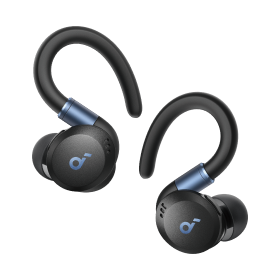
Thus technology will debut in our latest soundcore in-ear earbuds, which appeared on the market during Anker Day on 21 May 2026.
We have built Thus technology into them to provide advanced AI-based audio functions — including the Clear Calls function utilising 10 sensors — in everyday use, without compromising battery life.
Our earbuds were also entered into the Guinness World Records™ in the category "Best Speech Quality Score (G-MOS) for TWS Earbuds (Objective Test)". G-MOS is a standard indicator that measures how clearly the caller's voice can be heard during a conversation — and reflects real call quality, not just results in controlled test conditions.
Specific model names, prices, and full specifications will be confirmed during Anker Day. If you want to receive notification of their launch, you can register your interest before launch directly on our website.

Conclusion
This is the effect of creating something from the ground up.
Conversations that are not interrupted in difficult conditions, artificial intelligence responding with less delay, and processing that keeps audio data local. This is how device-embedded AI should work.
The first soundcore in-ear earbuds with Thus technology went on sale on 21 May during Anker Day. Learn the details and sign up for launch notifications directly on our website.
Frequently Asked Questions
What Does "Compute-in-Memory" Mean in Simple Terms?
Compute-in-memory means that calculations take place directly in the memory circuit, rather than in a separate processor. Think of it as doing calculations on a sticky note instead of copying numbers to a whiteboard, doing calculations there, and copying the result back. Data never needs to be moved to be processed, which saves both time and energy. In the case of in-ear earbuds, this means more efficient AI that consumes less battery.
When Will the First soundcore In-Ear Earbuds with Thus Technology Be Available?
The first soundcore in-ear earbuds with ANKER Thus™ technology were launched on the market during Anker Day on 21 May 2026. Registration to receive updates regarding the launch is available on our website before the launch date.
Does ANKER Thus™ Technology Require an Internet Connection?
No. Thus runs key AI-based audio functions directly on the device, so basic functions such as noise reduction during calls work without the need for continuous cloud connection. The AI is not dependent on a server and does not require communication with the cloud. The call sound still passes through the operator's network, as with any telephone call — Thus only processes noise reduction and sound analysis on the device that takes place before and after the call.
How Is Thus Different from Chips in Traditional In-Ear Earbuds?
Most earbuds currently available on the market use processors where memory and computing are physically separate. This separation limits both the size of the AI model that can run on the device and the chip's energy efficiency for AI tasks. Thus utilises a compute-in-memory architecture that completely eliminates this separation. As a result, we get a larger, more efficient AI model that consumes less energy during operation. This difference becomes most noticeable in demanding real-world conditions, such as a noisy environment during a call.


