








Do Headphones for Snoring Work? Learn How to Quiet Your Partner
Sharing a bed with someone who snores can slowly turn peaceful nights into more fragmented sleep. In smaller flats, where sound travels easily, even moderate snoring can seem louder than it really is.
That is when headphones for snoring start to make sense. Many people reach for them as a practical way to rest better without changing their whole sleep arrangement. But do anti-snoring headphones genuinely help in everyday situations?
Why Snoring Disrupts Sleep So Much
Snoring is not a constant background sound. It comes in waves, sometimes quiet, sometimes suddenly louder. Those changes interrupt deep sleep and REM cycles, even if you do not fully wake up. Over time, your sleep becomes lighter and less restorative.
You may notice it the next day without immediately linking the cause to your tiredness. Feeling worn out, slightly irritable, and less able to concentrate. When this happens every night, it builds up over time. For couples, it can also create tension, especially when one person feels guilty and the other simply wants uninterrupted sleep. That is why night-time noise reduction matters more than it first seems.
What Makes Anti-Snoring Headphones Different?
At first glance, they look like ordinary earbuds. But anti-snoring headphones are built with a different purpose. They are designed to stay comfortable for hours and to provide consistent night-time noise reduction rather than just short listening sessions.
They manage sound in two main ways:
- Passive isolation creates a physical barrier to reduce incoming noise
- Sound masking adds a controlled layer of audio over snoring
- White or pink noise helps smooth out sudden changes in sound
People who have used earplugs may notice that they do not always deal well with irregular snoring. That is because they only reduce sound rather than stabilise it. Sleep headphones for couples take a slightly different approach by combining both methods.
It is also worth noting that blocking snoring does not mean eliminating it completely. In practice, the sound becomes less noticeable, so your brain is more likely to ignore it.
Comfort matters a great deal here. These earbuds are smaller, softer, and shaped for side sleeping. If you tend to move at night, that difference becomes very noticeable.
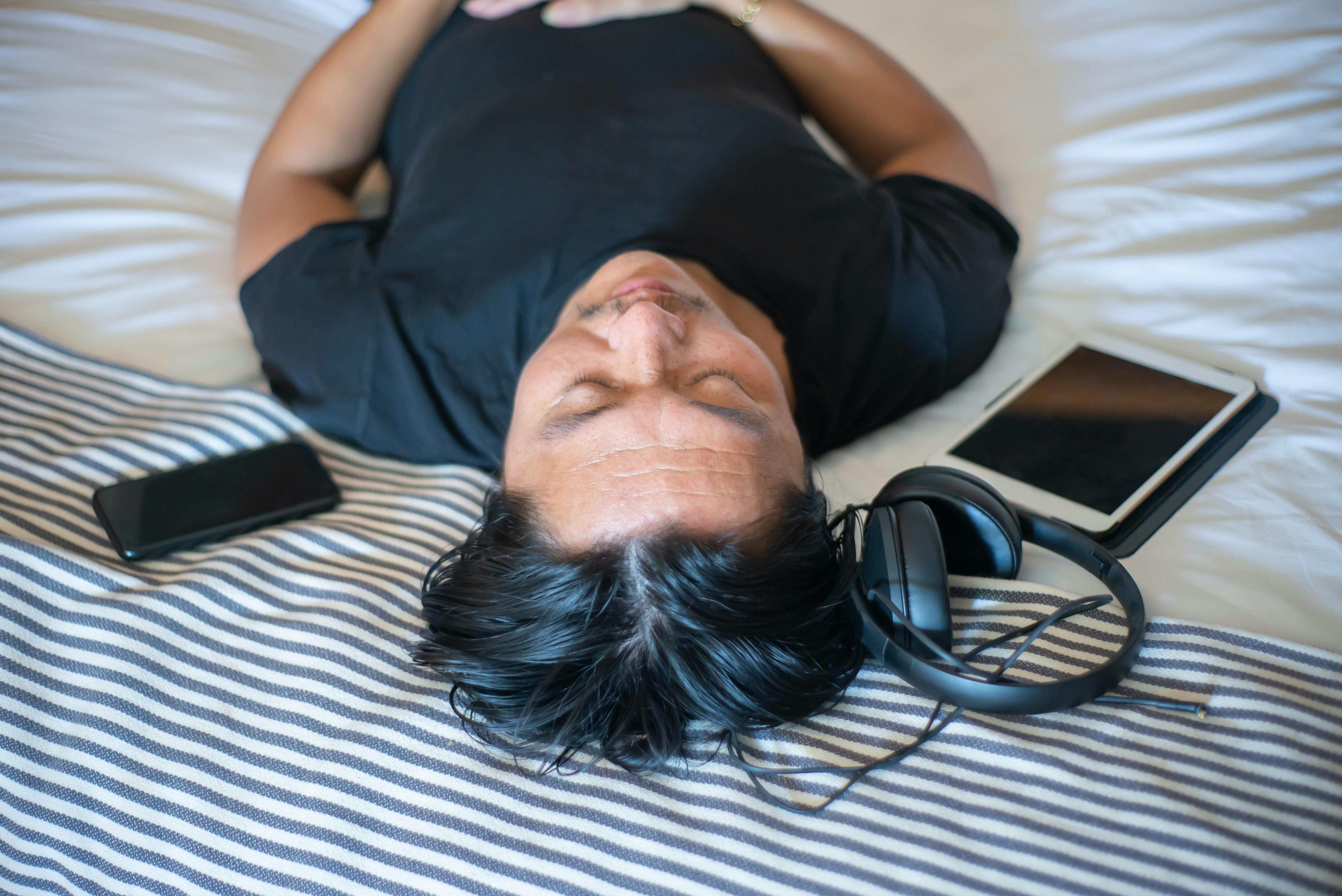
Do Headphones for Snoring Actually Work?
In most cases, yes, but not always in the way people expect. Headphones for snoring do not stop the sound itself. Instead, they reduce its prominence, making it easier to stay asleep.
When you use them consistently and get the fit right, the effect can be quite noticeable. The key is not just blocking noise but creating a more stable sound environment that does not keep changing.
Even so, results are not identical for everyone. Louder snoring or highly irregular patterns may still break through at times. Fit also matters more than many people assume. If the earbuds do not sit properly, the effect drops quickly.
They are not a medical solution either. They do not treat conditions such as sleep apnoea. But as a practical step before larger changes, such as sleeping separately, they are often enough to make a meaningful difference.
Modern Sleep Headphones for Couples That Help with Night-Time Noise Reduction
soundcore Sleep A30: intelligent snoring-noise control
soundcore Sleep A30 is designed specifically to block snoring in shared bedrooms. Its adaptive ANC system with ear canal adaptation adjusts to the shape of your ear, helping soften low frequencies such as rumbling snoring or distant traffic.
What sets it apart is the adaptive snore-masking technology. Instead of playing a fixed sound, it reacts to snoring in real time and adjusts the masking audio. So if the snoring changes, the sound you hear changes with it. That makes performance feel more stable throughout the night.
Comfort has been considered just as carefully. At only 3 g with soft silicone materials, it sits gently in the ear even if you sleep on your side. There is less risk of pressure and less need to readjust during the night.
Rather than relying on silence, it uses personalised sleep audio. That steady background layer makes these headphones more effective for night-time noise, especially when your surroundings are not ideally quiet.
soundcore Sleep A20: reliable noise masking for nightly snoring
soundcore Sleep A20 takes a simpler approach, but it still performs well with moderate snoring. Its 4-point noise-masking system combines passive blocking with sound masking to maintain a steadier sound environment.
Twin-Seal ear tips improve the physical seal, which helps reduce sharper, higher-frequency sounds. You can also use its white-noise library or stream audio over Bluetooth depending on what helps you relax most easily.
Battery life is one of its strong points. With up to 14 hours on a single charge and up to 80 hours with the case, it easily lasts through full nights without frequent charging.
Its shape is designed for side sleeping, so it stays comfortable even if you do not stay in one position. For couples looking for sleep headphones without too many advanced features, that is often more than enough.
How Sleep Headphones for Couples Compare with Earplugs
Both options aim to reduce noise, but they work differently and feel different over time.
- Earplugs rely entirely on passive sound blocking
- Sleep headphones combine sound masking with noise reduction
- Volume and sound type can be adjusted to personal preference
- Headphones are reusable and offer extra features
Earplugs can still do the job, especially for lighter sleepers. But with irregular sounds such as snoring, they often feel inconsistent. In comparison, noise-reducing sleep headphones offer a more flexible long-term way to block snoring.
Feature |
Sleep Headphones |
Earplugs |
Noise control |
Combine sound masking with isolation |
Passive attenuation only |
Overnight comfort |
Designed for side sleeping |
May create pressure over time |
Adaptability |
Adjustable sound and volume |
Fixed level of reduction |
Reusability |
Rechargeable and designed for long-term use |
Disposable or limited reuse |
Other Ways to Deal with a Partner’s Snoring
Encourage snoring solutions
Sometimes small changes can reduce snoring at the source. They are not always immediate, but they may help over time.
- Changing sleep position to reduce airway restriction
- Maintaining a stable, healthy weight
- Using nasal strips to support airflow
- Adding a humidifier to reduce dryness
Improve your sleep environment
Your surroundings also shape how noticeable snoring feels at night.
- White-noise machines to create a consistent background sound
- Earplugs as a simple back-up option
- Adjusting the room layout to reduce echo or sound reflection
Use separate sleep solutions without sleeping separately
You do not always need identical sleep setups to rest well together. Small personal adjustments can reduce disruption.
- Using separate duvets to reduce movement transfer
- Choosing mattress firmness that suits each person
- Adjustable beds for slight changes in sleeping angle
Check whether the snoring may be medical
In some situations, snoring is more than a night-time annoyance. It may point to something else.
- Loud snoring combined with pauses in breathing
- Ongoing daytime fatigue
- Morning headaches or dry mouth
If these appear regularly, it is worth speaking to a doctor.
Conclusion
Anti-snoring headphones can make a meaningful difference to night-time noise reduction. They do not eliminate snoring completely, but they make it much easier to ignore.
For couples sharing a bed, that often means fewer interruptions and more effective rest. With the right fit and a small amount of adjustment, they can quietly improve sleep quality night after night.
Frequently Asked Questions
1. Do anti-snoring headphones remove the sound of snoring completely?
No. They reduce how noticeable it feels rather than eliminating it entirely.
2. Are anti-snoring headphones safe to wear every night?
Yes, provided they are designed for sleep and fit properly, they can be used regularly.
3. What type of sound works best for blocking snoring?
Steady sounds such as white noise or pink noise usually work best because they do not change suddenly.
4. Can both partners use sleep headphones at the same time?
Yes. Each person can use their own pair without affecting the other.
5. Do anti-snoring headphones replace medical treatment?
No. They do not treat underlying conditions and should not replace medical advice where needed.


