








What Is AI Call Noise Cancellation? soundcore Clear Calls
Key Information:
-
AI-based call noise reduction works in the microphone, providing clean sound of your voice, so interlocutors hear you, not ambient sounds.
-
Traditional call noise reduction uses microphones, DSP processor, and beamforming technology to dampen constant noises, but has greater limitations with sudden sounds.
-
Artificial intelligence improves conversation comfort by recognising speech patterns and classifying noises, such as wind noise, voices, keyboard sounds, and street traffic, then applying more targeted processing.
-
The soundcore Clear Calls function, based on ANKER Thus™ technology, uses eight MEMS microphones and two bone conduction sensors in a ten-sensor system, providing clearer conversations.
-
On-device processing means the Clear Calls chain works in the in-ear earbuds, helping protect conversation privacy, whilst simultaneously improving call quality in real-world conditions, such as cafés, underground platforms, windy streets, and home workplaces.
What Is AI Call Noise Cancellation? soundcore Clear Calls
You are in a crowded café conducting an important call, and the person on the other side keeps asking: "Could you repeat that?" This situation is embarrassing — it occurs when noise, street traffic sounds, and background conversations drown out your voice. You may already be familiar with the active noise cancellation (ANC) function used during music playback, but AI call noise cancellation has a different goal: it protects what you say during telephone calls, so the microphone captures you, not the environment. In this article, we explain how it works and how it helps turn "Could you repeat that?" situations into conversations that people can actually follow.
What Is Call Noise Reduction and Why Does It Matter So Much?
Call noise reduction improves the sound quality transmitted during a telephone conversation. Microphones in the headset still capture both your voice and ambient sounds — the noise reduction function processes the microphone signal so the interlocutor hears more of your speech and less noise from the café, air conditioning hum, or wind noise. It is a microphone-side function: it changes how others hear you, not how you hear the environment. This differs from active noise cancellation (ANC), which limits external sounds reaching your ears during music listening or telephone calls.
The difference is visible every day:
- Working from home — neighbour's renovation sounds penetrate client calls.
- Commuting to work — announcements and crowd noise drown out your voice.
- Outdoors — wind and street traffic distort your words before they reach the interlocutor.
In each of these cases, better call noise reduction means fewer situations where the conversation gets stuck on "Could you repeat that?"
How Does Traditional Call Noise Reduction Work?
Have you ever wondered why a conversation in a café is still distorted, even if your earbuds have a noise reduction function?
Traditional systems use multiple microphones and fixed signal processing: the main microphone records your voice, and one or more reference microphones record the environment. The system compares these channels and directs sensitivity towards your mouth, simultaneously reducing sounds from other directions. This technique is called beamforming and works well for predictable noise, but has its limitations.
Where it works:
- Constant, predictable background noise — air conditioning hum, distant street traffic, constant fan noise.
Where it fails:
- Sudden noises — door slamming, nearby shouting, clattering — reach all microphones simultaneously, giving the system little time to react without muffling your voice.
- Unpredictable environments where noise changes quickly.
The main limitation: Traditional telephone call noise reduction operates according to fixed rules. It cannot learn or adapt. This is what artificial intelligence changes.
How Does AI Take Call Noise Cancellation to the Next Level?
The most noticeable result is simplicity and fewer requests for repetition, even in really noisy places.
Artificial intelligence processes data from microphones and beamforming and learns on this basis. A neural network recognises your voice, separates it from surrounding sounds, and classifies types of noise in real time. Unlike traditional systems that operate according to fixed rules, this system continuously updates processing based on what it actually hears — all with low latency and entirely on the device.
This means the system can distinguish wind noise from nearby voices, or mechanical keyboard clicking from low-frequency street traffic noise, and apply more precise processing to each type of noise, instead of simply lowering the entire signal level. This means that during the conversation, your natural tone, consonants, and intonation are clearly audible, without that empty, hollow sound that overly aggressive noise reduction can leave behind.
What Is the AI Call Noise Reduction Function in soundcore Earbuds?
In compatible soundcore earbuds, the call noise reduction function, based on ANKER Thus™ technology, is available under the name "Clear Calls". Thanks to it, 150 times greater computational power* has been achieved compared with the integrated circuit used in our previous flagship models. Call quality is treated here like a dedicated product, not an add-on. Instead of relying solely on the raw microphone signal, the system utilises processing built into the chip and local AI models to analyse the call signal, separate speech from background noise, and ensure voice intelligibility with low latency. Most importantly, what soundcore emphasises publicly: Thus™ brings audio AI to earbuds, so call clarity is ensured at the source, rather than treated as general filtering on the phone side.
Thanks to it, you need not fear:
- Noisy train station — announcements through speakers and crowd noise still try to drown out your words, and the Clear Calls function aims to keep your speech in the foreground.
- Windy day — wide-band noise can distort outdoor conversations; the system can treat wind differently than indoor conversations.
- Crowded café — steam from machines and overlapping voices compete in the same bands as your voice. The fusion system helps the interlocutor hear you clearly instead of first listening to the environment.
Why Does On-Device Processing Matter for Call Privacy?
No cloud means that the audio signal of the conversation used in the Clear Calls function is not sent to a provider's server for analysis outside the device. Processing takes place in the earbuds, so confidential business conversations — client names, numbers, personnel matters — do not go through an additional processing stage that you did not choose. For business users working from home, where the dining table often serves as a conference room, this small detail matters: you still have a clean outgoing signal, without assuming that a third party is always part of the network.
soundcore In-Ear Earbuds — AI-Based Call Quality in Practice
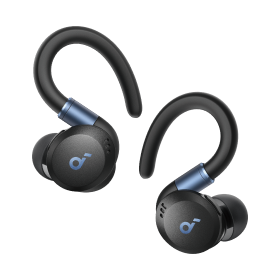
soundcore in-ear earbuds with ANKER Thus™ system are tuned for real calls, not just ideal laboratory curves. Their primary advantage is still AI-based call noise reduction — the key function that makes your speech easy to understand. Imagine a telephone call in a noisy conference room hallway: background noise is still present, but the interlocutor has a better chance of hearing you clearly, and your statements are more stable, instead of being an unclear echo from the hallway. You also need not worry about battery life: soundcore still provides flagship features of truly wireless earbuds — long battery life for a full day of meetings and commutes to work, ANC function allowing focus between calls, and comfort that makes long-term wear easy. If it is battery life, noise reduction, and comfort that make you choose this product, then call quality makes this purchase even more worthwhile.
Conclusion
AI-based call noise reduction means you will significantly less often hear during calls: "Could you repeat that?" Thanks to it, your voice remains in the foreground, even when cafés, transport hubs, and windy pavements try to drown out the conversation, so interlocutors hear you, not the background noise. soundcore in-ear earbuds with ANKER Thus™ technology offer this technology to consumers: combining multiple microphones and sensors with built-in neural processing tuned for real calls, so sound clarity results from an intelligent integrated circuit, not chance. Learn more about soundcore in-ear earbuds.

Frequently Asked Questions
Does AI Call Noise Cancellation Work Both Ways?
No. Call noise reduction works on the microphone side, whilst ANC works on the listener side. For a call to sound good on both sides, each must have appropriate functions. The interlocutor's microphone and environment still affect how clearly their voice reaches you.
How Many Microphones Are Needed for Clear Calls?
A greater number of microphones does not guarantee perfect call quality, but provides the system with more information to process. Two microphones can compare your voice with ambient noise, providing basic beamforming. Four microphones help earbuds track your voice as street traffic or other people's conversations change around you. Eight microphones provide the DSP processor with a richer picture of speech and noise. Bone conduction sensors add vibrational signals from your own voice, which is useful when wind drowns out air microphones. That is why soundcore earbuds use eight MEMS microphones + two bone conduction sensors as a ten-sensor fusion system for AI call noise reduction.
Is AI Call Noise Cancellation the Same as ANC?
No. AI call noise cancellation improves the quality of the voice sent during calls, so the interlocutor hears you more clearly. ANC improves what you hear by reducing ambient noise during listening. One function improves the quality of the signal sent by the microphone, and the other improves reception. In premium earbuds, they often work simultaneously, but they are not the same functions.
Does AI Call Noise Cancellation Work Without Internet Access?
Yes. Clear Calls technology processes sound using AI directly in the earbuds, without the need for Internet connection or cloud server.
Will AI Noise Cancellation Affect the Quality of My Voice?
It may, depending on the system. A good AI call noise reduction system, such as that powered by the Thus™ chip, should reduce ambient noise whilst preserving the natural tone, timbre, and rhythm of your voice. The goal is not to give your voice an artificial sound, but to ensure its intelligibility. Lower quality noise reduction may excessively suppress the signal, making speech sound metallic, empty, "underwater", especially with wind or sudden noises.


