








How to Use White Noise for Sleep: Headphones That Help Block Out Noise
Night-time noise appears in small ways. A car passes, someone closes a door, a neighbour drags a chair. In many flats, these sounds travel further than you might expect.
That is exactly where white noise for sleep starts to help. It gives your ears a steady sound to focus on, so random noises do not stand out as much.
What Is White Noise for Sleep and How Does It Support Rest?
White noise for sleep is a steady sound that covers a broad range of frequencies. It does not rise or fall suddenly, which is exactly why it works well at night.
Your brain responds to change. When a sound appears out of nowhere, even if it is quiet, it can pull you out of lighter sleep. A consistent sound makes those changes less noticeable.
Think of a fan running in the background or gentle rain against a window. Nothing sharp, nothing unexpected. Just a consistent layer of sound that stays the same.
Benefits of Using White Noise at Night
Using white noise for sleep can make nights feel more predictable, especially if your surroundings are not quiet.
- Helps reduce awakenings caused by sudden sounds such as footsteps or traffic
- May shorten the time it takes to fall asleep by creating a steady background
- Supports more stable sleep cycles by limiting disruptions
- Useful for shift workers sleeping during the day
- Helps in shared bedrooms where noise cannot be fully controlled
It works best when you keep things consistent. The same sound, a similar volume, every night. Your body adapts to it more quickly than you might think.
How to Use White Noise for Sleep Effectively
Getting the most out of white noise for sleep depends less on technology and more on routine.
- Choose steady sounds such as white noise, rainfall, or a fan
- Avoid music with changing tempo or sudden volume shifts
- Keep the volume moderate, just enough to cover outside noise
- Turn it on 10 to 15 minutes before going to bed
- Let it play through the night without interruption
If the noise around you is stronger, headphones can help. Many people prefer falling asleep with Bluetooth headphones when dealing with snoring or street noise that does not fade away.
Is Sleeping with Headphones Healthy?
It is a fair question: is sleeping with headphones healthy, especially if you plan to use them every night?
In most cases, it is harmless. The main issue to watch is volume. If it is too high for many hours, problems can develop.
The effects of sleeping with headphones are usually tied to comfort rather than health dangers. If something presses too hard against your ear, you will notice it quickly. That is why fit matters more than many people expect.
When used correctly, the health impact of sleeping with music is minimal. Wireless models also remove the problem of tangled cables, which is why many people choose to fall asleep with Bluetooth headphones.

How to Choose Comfortable Headphones for Sleep
Finding comfortable sleep headphones often comes down to the small details you only notice after a full night of use.
- Smaller shapes work better if you sleep on your side
- Soft, skin-friendly materials reduce irritation over time
- Lightweight designs feel less noticeable overnight
- A secure fit keeps them in place when you move
- Battery life should comfortably last until morning
If you are looking for safe headphones for sleep, features such as volume control and sleep timers can help keep things balanced. You can also check the latest sleep headphones rankings to see how different models perform in real-world use.
Ultimately, comfort usually matters more than extra features. If something does not feel right, you will not keep using it.
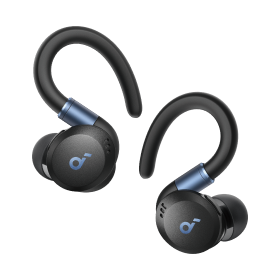
soundcore Sleep A30: Designed for Night-Time Comfort and Noise Blocking
Night-time noise rarely comes from just one source. You may hear traffic, a partner snoring, or appliances running in the background. It all adds up.
soundcore Sleep A30 is designed around exactly those challenges. It combines several ways of managing noise rather than relying on only one.
Its triple noise reduction system combines active noise cancelling, passive isolation, and adaptive sound masking. Low, steady sounds such as traffic are reduced, whilst irregular sounds such as snoring are masked with audio.
Comfort is where the difference really shows. Each earbud weighs around 3 g, has a slim shape, and uses a soft silicone finish. If you sleep on your side, the flat profile helps reduce pressure against the pillow.
Battery life is tuned for overnight use. In sleep mode, you get roughly 8 to 10 hours, and the charging case extends that across several nights. There is no need to recharge every day.
If you prefer your own audio, Bluetooth connectivity is available too. That makes it easy to fall asleep with Bluetooth headphones, whether you use white noise, podcasts, or more familiar sounds.
Conclusion
Night-time noise is hard to control, but you do not have to react to it in the same way. Using white noise for sleep with the right headphones can make your nights feel more stable and easier to manage. soundcore offers options designed specifically for that purpose.
FAQs
1. Can white noise really help you fall asleep faster?
Yes, white noise for sleep reduces sudden sound changes, which helps the mind settle more easily.
2. Is sleeping with Bluetooth headphones safe?
For most people, yes. Keep the volume moderate and make sure the fit stays comfortable through the night.
3. Does ANC completely block night-time noise?
No. It mainly reduces lower-frequency sounds. It works best when combined with sound masking.
4. What volume level is safe for sleeping with white noise?
A moderate level that covers background noise without sounding loud is usually enough.
5. Is white noise better than music for sleep?
White noise for sleep usually works better because it stays consistent. Music often changes, which may interrupt sleep.
6. Is ANC safe?
Yes. Active noise cancelling reduces background noise without requiring you to raise the volume, which can actually help protect hearing. As long as the volume remains moderate and the earbuds fit comfortably, this technology can be used overnight.


